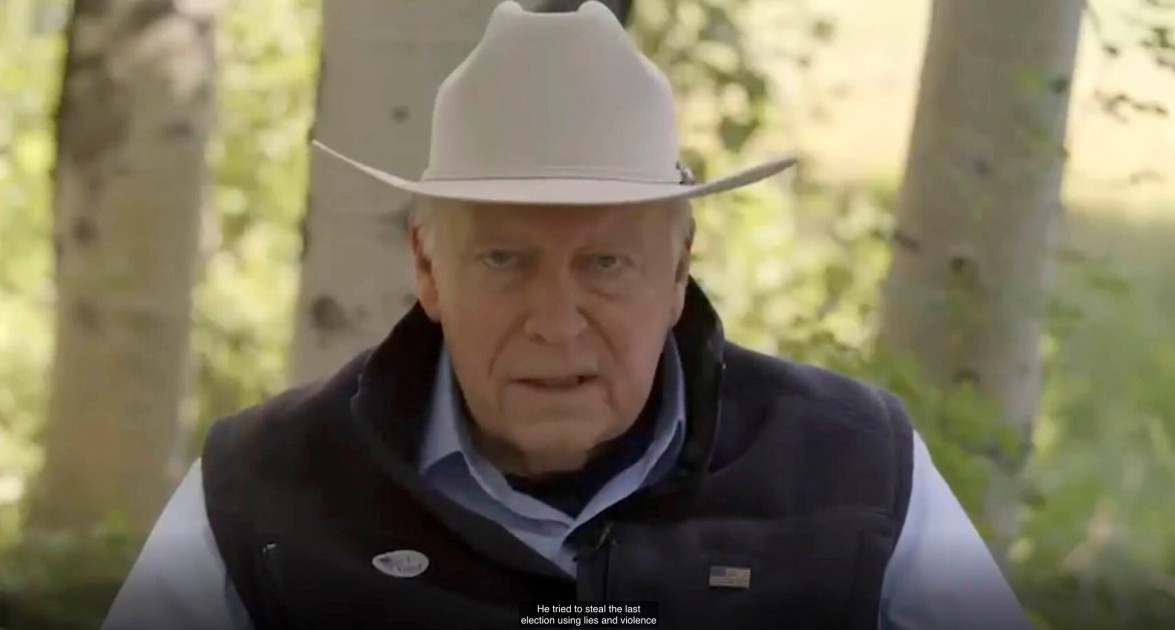
Dick Cheney died Tuesday at 84 from complications of pneumonia and cardiovascular disease that plagued him throughout his adult life. The former vice president who served alongside George W. Bush from 2001 to 2009 was the most powerful second-in-command in American history – the architect of the war on terror, the Iraq invasion, and an expansive vision of executive authority that reshaped the presidency.
His death came with bitter irony. Cheney spent his final years opposing Donald Trump as “the greatest threat to our republic” and endorsing Kamala Harris in 2024 – extraordinary acts for a lifelong conservative Republican.
Trump, who now exercises executive power in ways that exceed even Cheney’s boldest assertions, remained conspicuously silent about Cheney’s death while other Republicans offered condolences.
The silence speaks to how thoroughly Trump has remade the Republican Party that Cheney helped build. The man who championed unchecked presidential authority became persona non grata when he warned that Trump’s version of that authority threatened constitutional governance itself.

The Power Behind the Throne
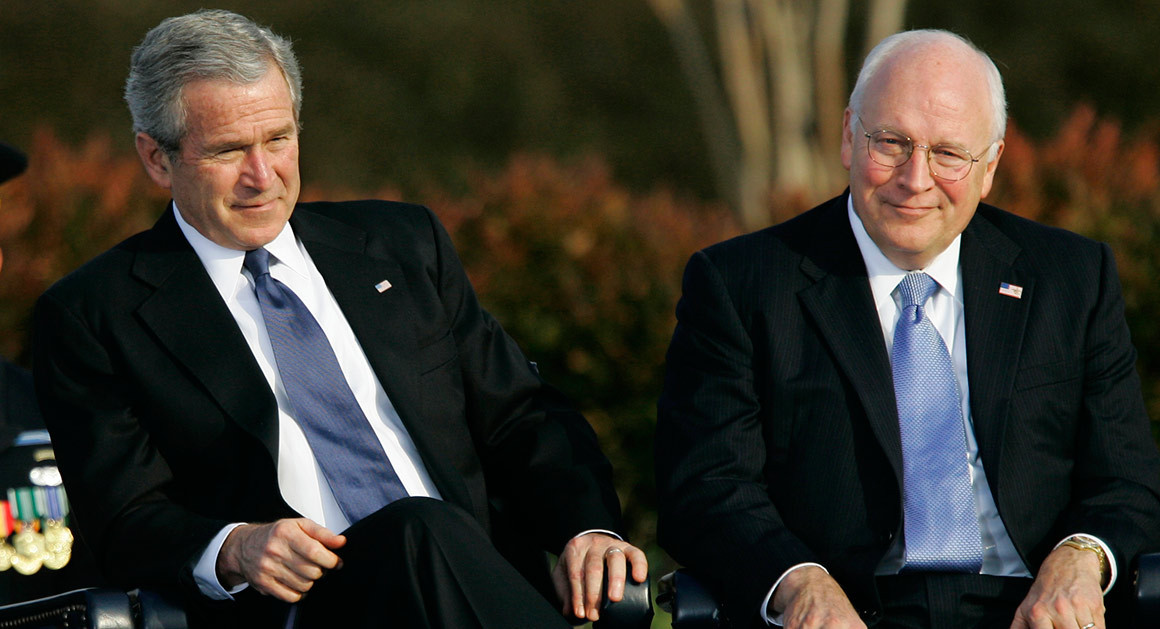
Characterizations of Cheney as “the real president” oversimplify the Bush administration’s dynamics. But Cheney wielded influence unprecedented for a vice president. Bush selected him to vet potential running mates in 2000. The vetting process concluded with Cheney himself on the ticket – “the selector was the best person to be selected,” Bush later explained.
Cheney brought Washington experience Bush lacked. The Texas governor had no federal elected experience, minimal foreign policy background, and limited military knowledge. Cheney had served as White House chief of staff under Ford, six terms in Congress as Wyoming’s representative, and Defense Secretary under the first President Bush.
That experience translated into institutional power. Cheney controlled access to information reaching the president. He shaped policy development across national security, energy, and executive authority.
He operated through backroom influence rather than public advocacy, wielding power most effectively when operating invisibly.
September 11 and the Changed Man
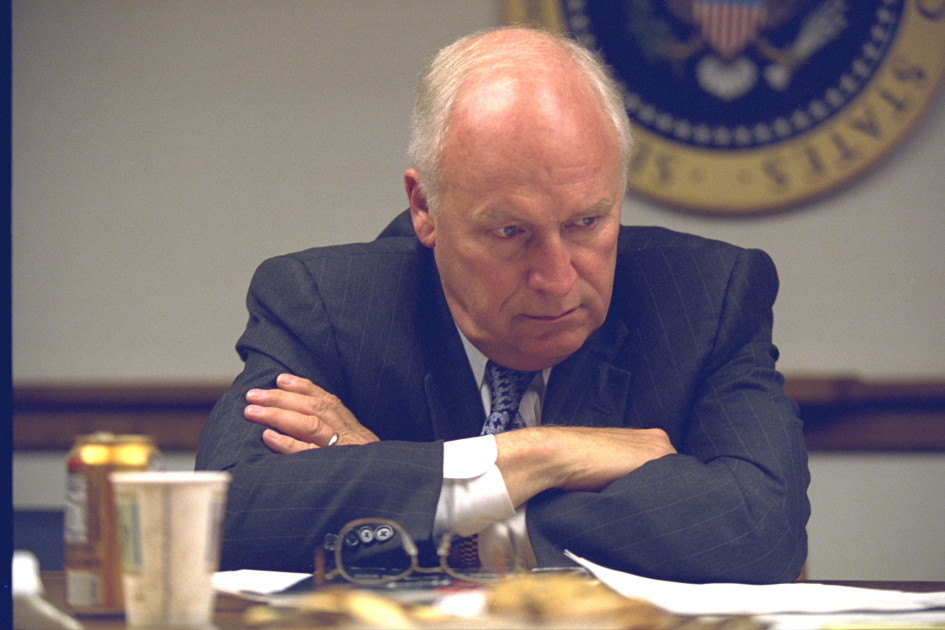
Cheney was in the White House when the second plane hit the World Trade Center. He watched from the Presidential Emergency Operations Center beneath the West Wing while Bush flew aboard Air Force One. From that bunker, Cheney gave the order authorizing the military to shoot down hijacked airliners if they threatened Washington.
“At that moment, you knew this was a deliberate act. This was a terrorist act,” he told CNN in 2002.
Cheney later reflected that the attacks left him with an overwhelming responsibility to ensure such assault on the homeland never happened again.
That sense of responsibility – or perhaps the opportunity the crisis provided – led Cheney to champion expansive assertions of presidential power unconstrained by congressional oversight or international law. Enhanced interrogation techniques that critics called torture. Detention without trial at Guantanamo Bay. Warrantless surveillance of American citizens.
All justified by the unprecedented nature of the threat and the corresponding necessity of unlimited executive authority to combat it.
The Iraq War Built on Faulty Intelligence
Cheney’s aggressive warnings about Iraq’s weapons of mass destruction programs and alleged al-Qaeda connections played enormous roles in building public support for the 2003 invasion. His claim that 9/11 hijacker Mohamed Atta met with Iraqi intelligence in Prague became a key talking point despite never being substantiated.
Congressional investigations later showed that Cheney and other officials exaggerated, misrepresented, or failed to properly portray intelligence about WMD programs Iraq didn’t possess. Cheney insisted in 2005 he acted on “the best available intelligence” and that any claim data was “distorted, hyped, or fabricated” was “utterly false.”
The Iraq war became a catastrophic quagmire. Thousands of American troops died. Hundreds of thousands of Iraqi civilians perished. The region destabilized in ways that continue affecting geopolitics today. And the faulty premises underlying the invasion damaged American credibility for decades.

Cheney never expressed regrets.
“It was the right thing to do then. I believed it then and I believe it now,” he told CNN in 2015.
When confronted with a 2014 Senate report concluding enhanced interrogation was brutal and ineffective, he responded: “I would do it again in a minute.”
The Executive Power Doctrine
Cheney’s aggressive anti-terror policies reflected his belief that presidential authority had been mistakenly eroded after Vietnam and Watergate. He viewed congressional oversight as impediment to necessary executive action. He championed secrecy, refusing to disclose even basic information about his energy task force deliberations in litigation that reached the Supreme Court.