ADVERTISEMENT
The Critical Question: When Should You See a Doctor?
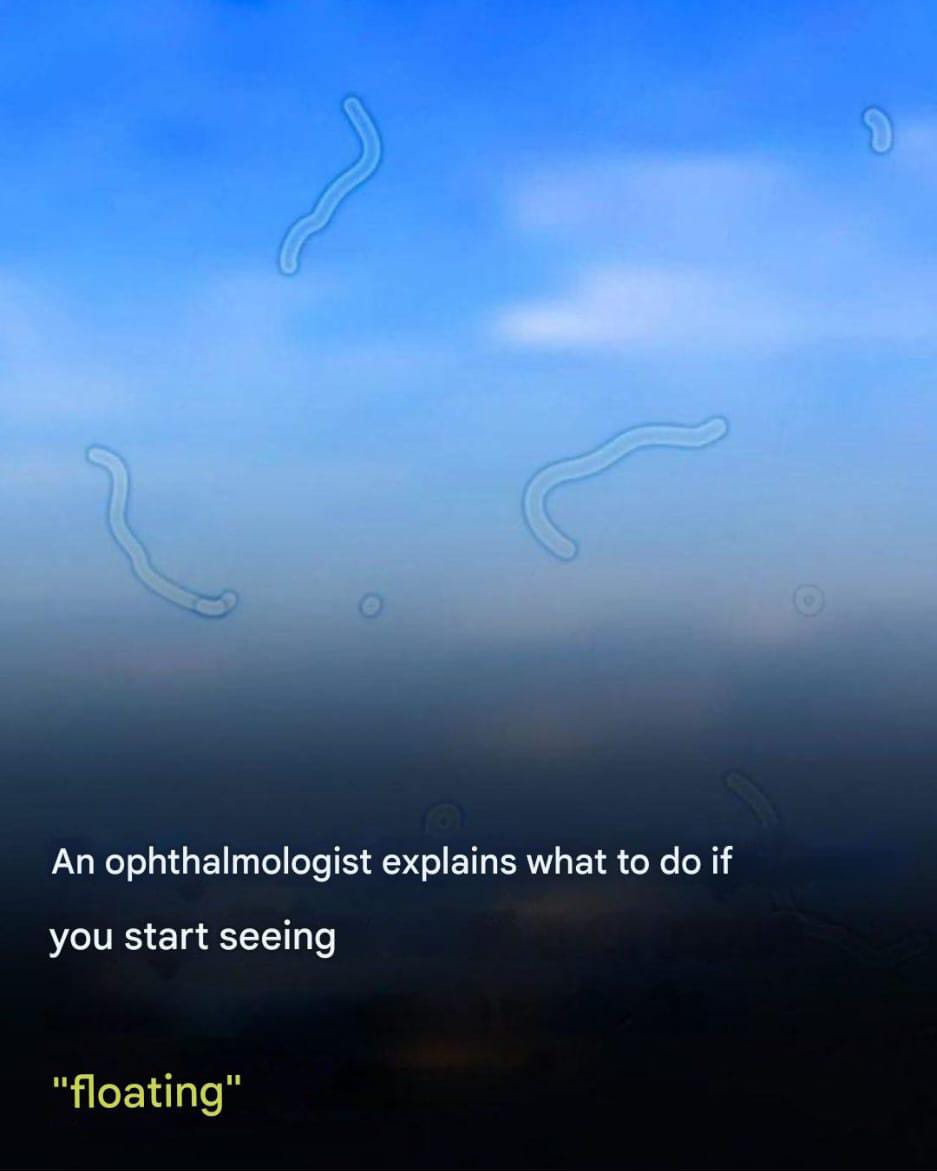
In most cases, floaters are a normal part of aging and are not a cause for alarm. However, they can sometimes be a warning sign of a serious eye emergency.
-
A Sudden Shower of New Floaters: Especially if dozens appear at once.
-
Flashes of Light: Seeing brief, lightning-like streaks in your peripheral vision, even in a well-lit room.
-
A Shadow or Curtain in Your Vision: A dark area that seems to encroach on your side (peripheral) vision.
-
A Sudden Increase in Floaters after an eye injury.
These symptoms could indicate a retinal tear or detachment, which is a medical emergency that requires prompt treatment to prevent permanent vision loss.
What Are the Treatment Options?
For the vast majority of people, no treatment is needed. Your brain learns to ignore the floaters over time, and they often become less noticeable on their own.
However, if floaters are so dense that they significantly impair your vision, two main options exist:
-
Laser Vitreolysis: A laser is used to break up large floaters, making them less noticeable. This is a non-invasive procedure, but it is not suitable for all types of floaters and carries some risks.
-
ADVERTISEMENT
