ADVERTISEMENT
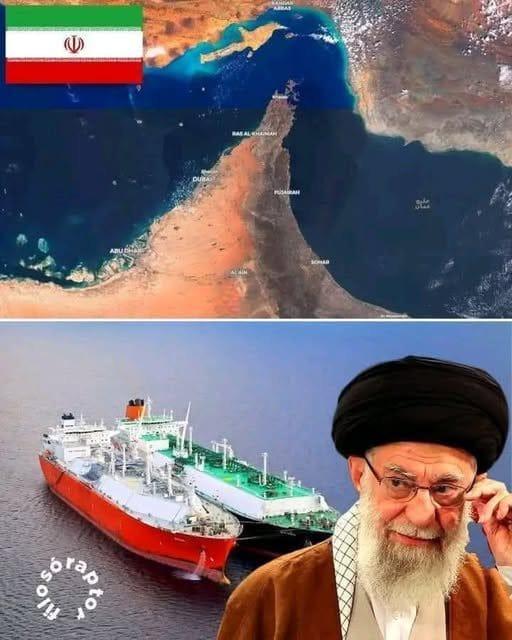
The geopolitical landscape of 2026 has been thrust into a state of acute instability following the Iranian Parliament’s legislative movement toward closing the Strait of Hormuz. This narrow, sickle-shaped waterway, which separates the Persian Gulf from the Gulf of Oman, is arguably the most consequential maritime chokepoint in the global energy infrastructure. At its narrowest point, the shipping lanes are a mere 33 to 34 kilometers wide, yet through this slender needle passes the lifeblood of modern industrial civilization. The decision to mobilize toward a blockade is not merely a regional maneuver; it is a calculated strike at the heart of the global economy, carrying the potential to trigger a financial contagion that could rival or surpass the Great Recession.
The strategic importance of the Strait cannot be overstated. It serves as the primary artery for approximately 30 percent of the world’s total seaborne-traded oil and nearly one-third of the global supply of liquefied natural gas (LNG). For decades, the free flow of tankers through these waters has been the stabilizing force behind international energy markets. However, the current crisis has been precipitated by a sharp escalation in hostilities, specifically reported strikes on Iranian nuclear facilities. In response to what Tehran views as an existential threat to its sovereignty and its technological ambitions, the Iranian leadership has reached for its most potent economic weapon. By threatening to shutter the Strait, Iran is demonstrating its ability to hold the global energy supply hostage, forcing every major power—from Washington to New Delhi and Beijing—to recalibrate their strategic priorities in real-time.
The United States, meanwhile, faces a classic dilemma of maritime hegemony. Since the 1980s and the “Tanker War” era, the U.S. Navy has positioned itself as the guarantor of free navigation in the Gulf. Any attempt by Iran to physically block the Strait would likely be met with a massive naval response. However, the modern theater of war is no longer limited to surface vessels. Iran possesses a sophisticated arsenal of anti-ship missiles, fast-attack small boats, and naval mines that could make any clearing operation long, costly, and dangerous. Furthermore, a military conflict in the Strait would almost certainly guarantee the very thing the international community fears: a prolonged spike in oil prices that could drive the global cost per barrel into uncharted territory, perhaps exceeding $200 or more.
China’s role in this unfolding drama is equally critical and far more opaque. As the world’s largest importer of oil, much of which flows through the Strait, China has the most to lose from a prolonged closure. Yet, Beijing also maintains deep economic and strategic ties with Tehran. China may see this as an opportunity to step in as a “neutral” mediator, potentially expanding its influence in the Middle East at the expense of American leadership. If China can negotiate a partial reopening or a “safe passage” agreement for its own vessels, it would signal a profound shift in the global order, where the security of the seas is no longer managed by a single Western power.
The mathematical reality of the Strait’s geography is what makes it so terrifying to economists. In the $V = \frac{Q}{A}$ logic of global trade, where $V$ is the velocity of goods, $Q$ is the quantity, and $A$ is the area of the passage, the Strait of Hormuz represents an extreme bottleneck. When the area $(A)$ is threatened with closure, the quantity $(Q)$ of energy reaching the market drops toward zero, causing the price to increase exponentially. This is the “Hormuz Factor.” It affects more than just the price at the pump; it impacts the manufacturing of plastics, the heating of homes in Europe, and the operating costs of every shipping vessel on the planet. The ripple effects would be felt in the stock markets of London and Tokyo within minutes of a confirmed blockade, as investors flee from energy-dependent sectors into safe-haven assets.
Beyond the immediate economic fallout, the psychological impact of the Iranian Parliament’s decision is creating a “risk premium” that is already being baked into global markets. Insurance rates for tankers operating in the region have surged, and shipping companies are being forced to consider the Cape of Good Hope as a viable, albeit much longer and more expensive, alternative. This rerouting adds weeks to delivery times and significantly increases the carbon footprint of global trade, adding an environmental cost to the geopolitical one.
The “Quiet Reset” of American policy, the twins born to a 58-year-old mother, and the internal political dramas of the United States all seem like distant echoes when compared to the structural threat posed by a closed Strait. In the interconnected world of 2026, a 33-kilometer stretch of water has become the pivot point upon which the stability of the entire century may turn. The world is witnessing a high-stakes game of chicken where the participants are not just two nations, but the collective interests of the entire human population.
As the Iranian Parliament moves forward with its approvals, the international community is left to wonder if a diplomatic off-ramp still exists. The closure of the Strait of Hormuz would be a “black swan” event of the highest order—a predictable disaster that everyone saw coming but no one was truly prepared to stop. For the average citizen, the crisis is a reminder of how fragile the systems of modern life truly are. A single legislative vote in a distant capital can determine whether a family in a different hemisphere can afford to drive to work or heat their home.
In the coming days, the movements of the Fifth Fleet, the rhetoric from Tehran, and the emergency meetings in the UN Security Council will be watched with bated breath. The goal of every world leader now is to prevent the “Hormuz Crisis” from becoming a “Hormuz Collapse.” In the shadows of these narrow waters, the resilience of the global order is being tested. Whether the world moves toward a new era of energy security or descends into a period of prolonged economic darkness depends entirely on whether diplomacy can widen the narrow 34-kilometer gap that currently threatens to swallow the global economy whole. The story of the Strait is the story of our absolute dependence on a geography that we do not control, and a reminder that in the modern age, peace is the most valuable commodity of all.
ADVERTISEMENT
