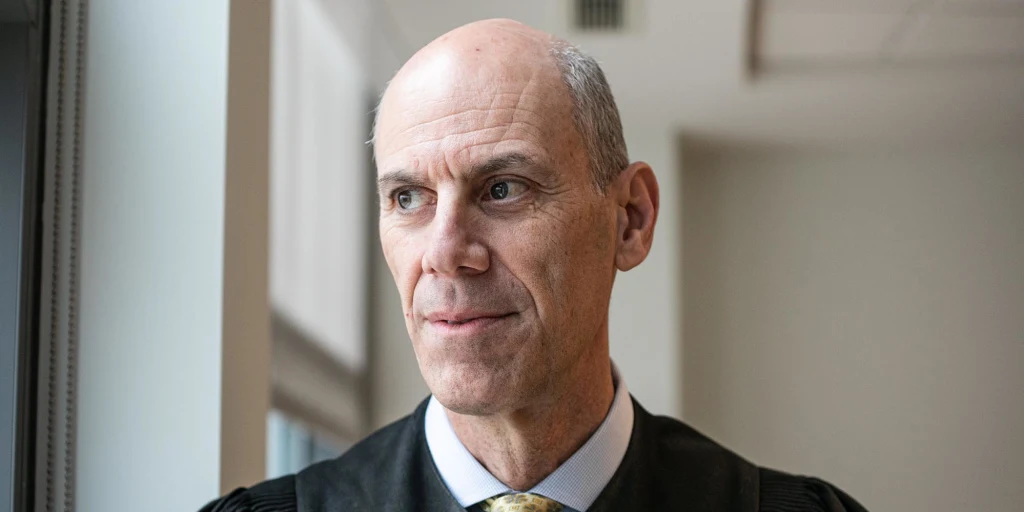
A firestorm has erupted on Capitol Hill, aimed directly at a single, powerful federal judge. U.S. District Judge James Boasberg is facing a torrent of criticism from Republican senators, with some even calling for his impeachment, after it was revealed he signed off on subpoenas for their phone records during the Jan. 6 investigation.
But this political outrage is colliding with a simple, bureaucratic fact: Judge Boasberg was just doing his job.
This controversy is a perfect storm of constitutional tensions, where the judiciary’s secret grand jury process, the legislature’s sacred “Speech or Debate” protections, and the executive’s aggressive prosecutorial tactics have all crashed into one another.
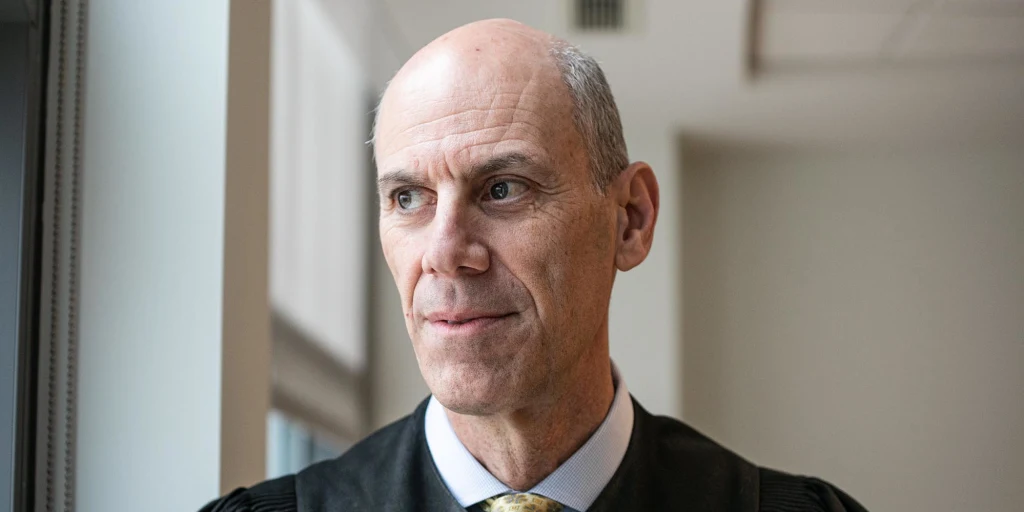
At a Glance: The Judge Boasberg Controversy
- What’s Happening: Republican senators, including Ted Cruz, are accusing U.S. District Judge James Boasberg of being a “partisan activist” for signing off on subpoenas for their phone records during the Jan. 6 probe.
- The Context: The subpoenas were part of Special Counsel Jack Smith’s investigation. Recently declassified documents show they targeted the call logs (not content) of 11 Republican lawmakers.
- The Reality of the Job: As the Chief Judge for the D.C. federal court, local rules require Judge Boasberg to oversee all grand jury matters. He was the designated judge for such requests, regardless of his personal politics.
- The Constitutional Issue: The conflict highlights a massive separation of powers clash between the executive branch’s power to investigate, the legislative branch’s “Speech or Debate” protections, and the judiciary’s role in approving investigative tools.
‘Worse Than Watergate’ or Just Doing His Job?
Last week, newly declassified documents revealed that Special Counsel Jack Smith’s team had subpoenaed the phone records of 11 Republican lawmakers surrounding the events of Jan. 6, 2021. The documents also showed the judge who approved those subpoenas was Judge James Boasberg.
The reaction from some Republicans was immediate and furious. Senator Ted Cruz called the probe “worse than Watergate” and suggested Boasberg should be impeached, fuming that the judge must have been printing the warrants “like the placemats at Denny’s.”
The reality, however, is far more procedural.
Under the local rules for the U.S. District Court in Washington, D.C., the Chief Judge “must hear and determine all proceedings before the grand jury.” Judge Boasberg became Chief Judge in March 2023. The subpoenas in question were signed in May 2023. He was, by law, the judge required to handle the request. This was not a case of a “rogue judge” seeking out a political target; it was the designated judge doing his administrative duty.

The Speech and Debate Clause: A Sacred Shield
The fury from senators like Cruz and Marsha Blackburn is not just political theater; it’s rooted in one of the legislature’s most powerful constitutional protections.
The Speech or Debate Clause (Article I, Section 6) states that for “any Speech or Debate in either House,” senators and representatives “shall not be questioned in any other Place.”
This clause is a core pillar of the separation of powers. It was designed by the Founders to protect lawmakers from being arrested or intimidated by a hostile executive branch (like a king or a president) for their legislative work.
Republican lawmakers argue that their phone calls related to challenging the 2020 election were part of their legislative duties and are therefore absolutely protected by this clause. The Justice Department, however, argues that the protection is not absolute and does not cover actions that could be part of a criminal conspiracy.
This is a profound, and still unresolved, constitutional gray area that the Supreme Court has rarely clarified.
A Judge in the Crosshairs
This is not the first time Judge Boasberg, an Obama appointee, has found himself in the middle of a political firestorm.
FISA Court: From 2014 to 2021, Boasberg served on the secretive Foreign Intelligence Surveillance Court (FISA Court), acting as its presiding judge for part of that time. This was the very court that approved surveillance warrants in the original “Crossfire Hurricane” probe.
Clinesmith Sentencing: In a decision that infuriated many conservatives, Boasberg declined to give prison time to Kevin Clinesmith, the former FBI lawyer who admitted to altering an email used in one of those FISA applications. Boasberg sentenced him only to probation.
Immigration Rulings: More recently, Boasberg has drawn President Trump’s direct ire for blocking the administration’s use of a 1798 law to deport Venezuelan migrants, which prompted Trump to call for his impeachment.

A System Under Unprecedented Strain
The controversy over Judge Boasberg’s signature on a subpoena is a symptom of a much larger breakdown of trust between the branches of government.
The executive branch, under both parties, has pushed the boundaries of its investigative powers. Congress, in response, has become increasingly aggressive in asserting its oversight authority and constitutional privileges.
And the judiciary, which is designed to be the neutral arbiter, is now increasingly seen by both sides as just another political player. This erosion of trust in the courts as an impartial referee is one of the most serious consequences of our hyper-partisan era.