ADVERTISEMENT
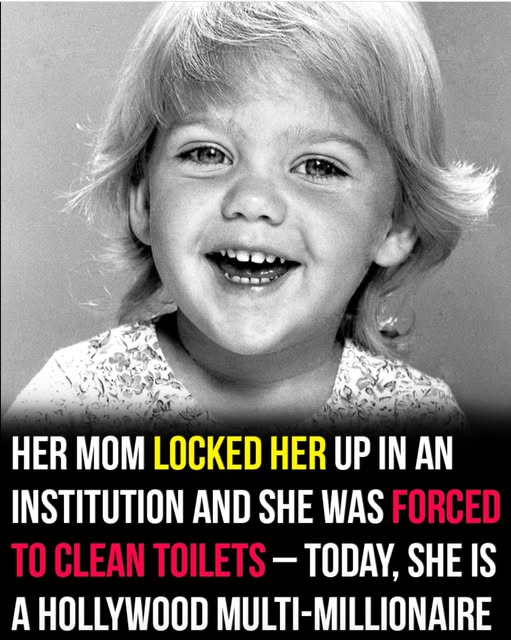
Drew Barrymore was eight years old when she had her first drink. By thirteen, she had already been through rehab. Not long after, she would attempt to take her own life and spend more than a year in a mental institution. Those facts alone would be enough to define most lives. Somehow, they became only the opening chapter of one of Hollywood’s most unlikely success stories.
Barrymore’s childhood began in front of a camera. At just eleven months old, she appeared in a dog food commercial, unknowingly continuing a family legacy that stretched back generations in Hollywood. Fame didn’t creep in gradually; it arrived almost immediately. By the time she was seven, she was a global sensation, charming audiences with her wide eyes and natural magnetism. A now-famous moment of her pouring Baileys over ice cream during a television appearance made her seem mischievous, confident, and far older than her years. An interview with Johnny Carson sealed the public’s affection, revealing a child who was funny, fearless, and disarmingly self-possessed.
Her film career began almost as early as her life itself. She appeared in Ken Russell’s Altered States at just five years old, but it was two years later, in E.T. the Extra-Terrestrial directed by Steven Spielberg, that she became a household name. Overnight, she was everywhere. Fame brought money, access, and freedom, but it also removed guardrails that most children rely on.
Barrymore was born into a family marked by addiction. Alcoholism and substance abuse ran through her bloodline, and her home life reflected that instability. Her father, John Drew Barrymore, struggled with alcoholism and violence and was largely absent from her childhood. Barrymore pieced together who he was through fragments and passing comments, eventually confronting her mother about his absence when she was just ten years old.
ADVERTISEMENT
