ADVERTISEMENT
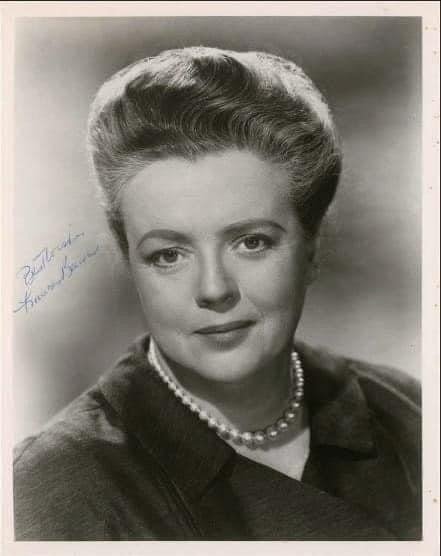
In 1967, that work earned Bavier a Primetime Emmy for Outstanding Supporting Actress in a Comedy Series. The award wasn’t just recognition of popularity. It was recognition of craft. She had built a character so believable that viewers didn’t think of her as acting. They thought of her as family.
But being beloved on screen didn’t guarantee ease behind it.
None of that makes her less admirable. If anything, it reveals the cost of being someone who takes the work seriously in a world that often rewards charm more than discipline. She wasn’t playing “Aunt Bee” off camera. She was Frances Bavier, a working actress with high standards and a strong desire to control her own space.
After The Andy Griffith Show ended in 1968, she continued as Aunt Bee in the spin-off Mayberry R.F.D., staying with the character until the series concluded in 1971. Then she walked away. In 1972, she retired from acting completely—no drawn-out farewell tour, no desperate attempt to stay visible. She had spent decades performing. She had done the work. And she chose a quieter life.
Her retirement took her to Siler City, North Carolina, not far in spirit from the world that had made Mayberry feel believable. She once spoke about loving the region’s roads and trees, drawn to the calm beauty of the landscape. At first, she engaged with the community, appearing at events and being welcomed as a local celebrity. But as time passed, she became more reclusive. She valued solitude. She guarded her privacy. She lived on her own rhythm—reading, listening to music, keeping her world small.
In December 1989, Frances Bavier died at 86, just days shy of her 87th birthday. She was buried in Oakwood Cemetery in Siler City. Her headstone includes the name “Aunt Bee,” a quiet acknowledgement of the role the public never stopped associating with her, along with the inscription: “To live in the hearts of those left behind is not to die.”
After her death, another side of her became more visible: her generosity. Her estate included notable bequests to the town she had chosen, including a trust that benefited the local police department, along with gifts supporting community causes and health-related needs. It was a final statement in her own language—practical, direct, quietly meaningful.
Frances Bavier’s legacy endures because she created something rare: a character that still feels safe without being shallow. Aunt Bee was warmth, yes, but also competence, backbone, and emotional intelligence. Behind that role was a classically trained actress who paid her dues on stages long before television made her famous, a woman who insisted on professionalism even when it made her difficult to categorize, and a person who stepped away from the spotlight when she was done with it.
People will always remember her in the Mayberry kitchen. The deeper story is that she earned that memory through a lifetime of craft—and then chose to live the rest of her life on her own terms.
