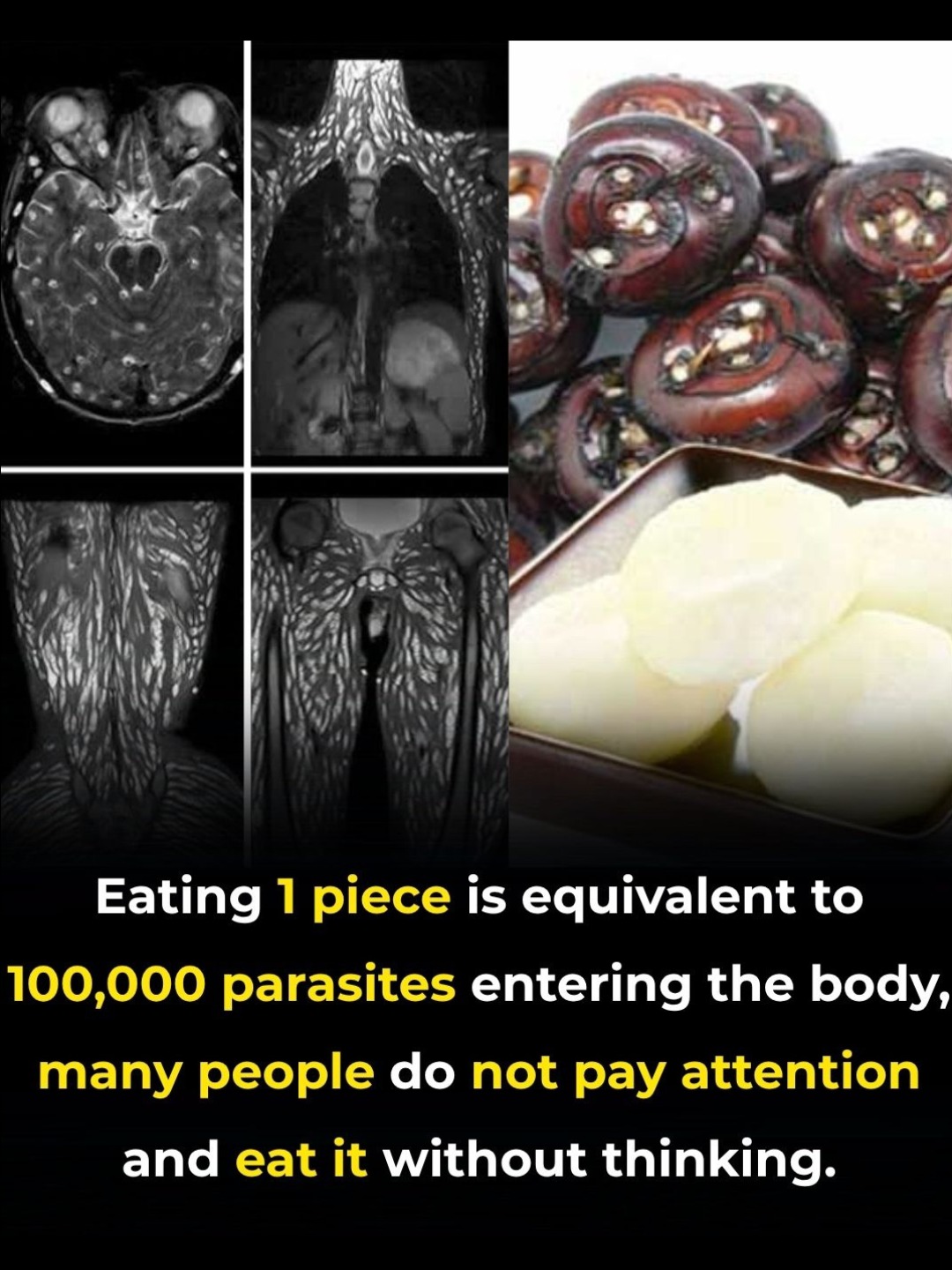
Most people assume that if food looks clean, smells fine, and tastes good, it must be safe. That assumption is one of the most dangerous myths in modern nutrition. Some of the most harmful threats to human health don’t announce themselves with spoilage or bad flavor. They arrive silently, survive refrigeration, tolerate mild heat, and begin causing damage long before symptoms are obvious. Parasites fall squarely into that category, and in many cases, even a single bite is enough to cause serious harm.
Parasitic infections are not rare, exotic events limited to remote regions. According to the World Health Organization, more than 3.5 billion people worldwide are affected by parasitic infections every year. These organisms enter the body through food and water, evade the immune system, and can live for months or even years inside human hosts. Unlike bacteria, parasites are complex organisms capable of migrating through tissues, embedding themselves in organs, and triggering chronic illness that is difficult to diagnose and treat.
Some of the most common parasites include tapeworms such as Taenia solium and Diphyllobothrium, roundworms like Trichinella spiralis and Anisakis, and protozoa including Toxoplasma gondii, Giardia lamblia, and Cryptosporidium. These organisms are remarkably resilient. Many survive cold storage, resist chlorine, and are not reliably destroyed by undercooking. Once inside the body, they can cause digestive disorders, malnutrition, chronic fatigue, neurological complications, and in severe cases, organ damage or death.
Undercooked meat is one of the most significant sources of parasitic exposure. Pork is particularly high risk when eaten raw or undercooked. Trichinella spiralis causes trichinosis, a disease in which larvae migrate into muscle tissue, leading to pain, swelling, fever, and long-term weakness. Taenia solium, the pork tapeworm, is even more dangerous. If its eggs enter the bloodstream, they can lodge in the brain and cause cysticercosis, a condition associated with seizures, vision loss, and cognitive impairment. This is why raw pork should never be consumed under any circumstances.
Beef carries its own risks, particularly when eaten rare or as steak tartare. Taenia saginata, the beef tapeworm, can grow several meters long inside the intestine, stealing nutrients and causing abdominal pain, weight loss, and anemia. While often dismissed as “harmless,” untreated infections can persist for years and significantly impact health and quality of life.
Fish and seafood present another hidden danger, especially in the era of sushi, ceviche, and smoked fish. Anisakis worms can embed themselves in the stomach or intestinal wall, causing intense pain, vomiting, and allergic reactions. Diphyllobothrium, the fish tapeworm, can lead to vitamin B12 deficiency and neurological symptoms. While “sushi-grade” fish is frozen to reduce parasite risk, freezing is not foolproof, and improper handling increases exposure.
Shellfish such as oysters, clams, and mussels are particularly risky because they are filter feeders. They concentrate whatever is present in the water, including parasites and protozoa from sewage-contaminated sources. Raw shellfish has been linked not only to bacteria like Vibrio and viruses like norovirus, but also to Cryptosporidium and Giardia, which cause severe and prolonged gastrointestinal illness. Cooking shellfish until the flesh is opaque and the shells open is essential, especially for pregnant individuals and those with compromised immune systems.
Fresh fruits and vegetables are often perceived as inherently safe, but unwashed produce is a major source of parasitic infection worldwide. Crops grown in soil contaminated with animal or human feces can carry microscopic eggs and cysts that survive for long periods. Toxoplasma gondii is especially dangerous during pregnancy, potentially causing miscarriage or severe birth defects. Giardia and Cyclospora can trigger chronic diarrhea, bloating, dehydration, and nutrient malabsorption that persists for weeks or months.
Proper produce handling is non-negotiable. All fruits and vegetables should be washed under running water, not simply rinsed. Firm produce should be scrubbed with a brush to remove surface contamination. Leafy greens benefit from soaking in a diluted vinegar solution before rinsing thoroughly. Peeling reduces risk but does not replace washing, as contamination can spread during handling.