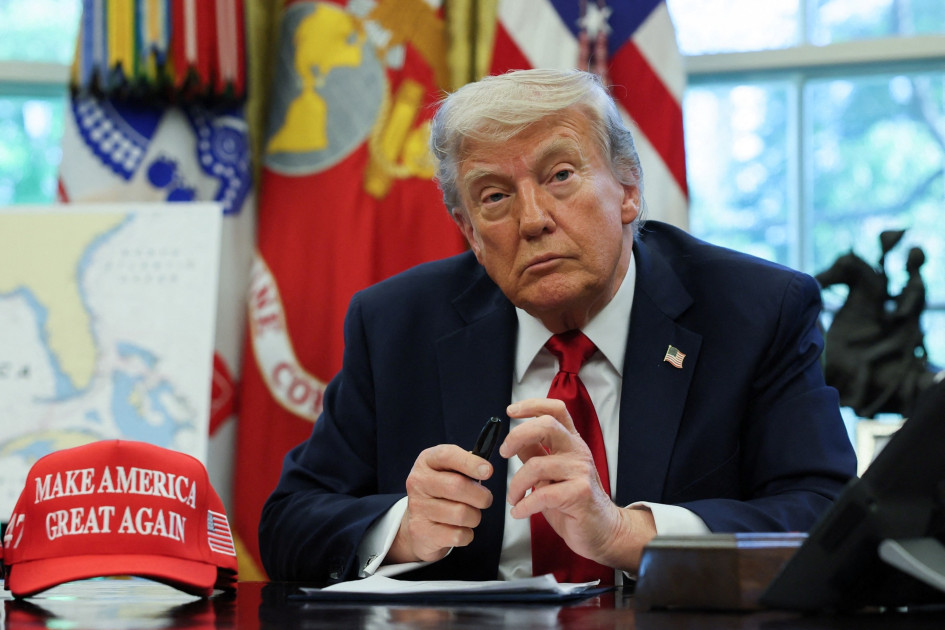
President Trump’s latest comments mark a subtle but significant shift from his earlier dismissals of the idea. While still avoiding a definitive declaration, his language has become more suggestive.
After claiming he hasn’t “thought about” the 2028 race, the Republican said he has “the best poll numbers” he’s ever had, concluding, “I would love to do it.”
This follows earlier statements where he claimed he was “not joking” about a third term and that “there are methods which you could do it.” The consistent, public flirtation with defying a clear constitutional limit cannot be dismissed as mere political theater.
Can a President Actually Serve Three Terms?
The legal and constitutional answer is an unambiguous no. The 22nd Amendment, ratified in 1951, states with absolute clarity:
“No person shall be elected to the office of the President more than twice…”
This amendment was not a minor adjustment; it was a fundamental constitutional reform enacted with broad bipartisan support. It was a direct response to President Franklin D. Roosevelt shattering the long-standing, two-term tradition established by George Washington. Its purpose is to prevent the concentration of power in one person for too long, a safeguard against the very kind of “president for life” scenarios the framers feared.

Are There Really Hidden “Loopholes”?
Despite the President’s hints about secret “methods,” the arguments floated by some allies are constitutional fantasies. The idea that he could run as Vice President and then assume the presidency, or declare martial law to remain in power, are scenarios drawn from political thrillers, not legitimate legal analysis. They represent a rejection of the constitutional order, not a clever navigation of its rules.
The 22nd Amendment means what it says. While it doesn’t prevent someone from running for a third term, it absolutely prevents them from being legally elected and holding the office again. Any attempt to circumvent this would trigger an immediate and catastrophic constitutional crisis.
Why Keep Testing a Clear Limit?
If a third term is legally impossible, why does the President persist? The discussion itself serves several political purposes. It keeps his base energized, projects an image of enduring strength, and allows him to dominate the news cycle. It also functions as another attack on the legitimacy of constitutional constraints themselves.
This fits into a broader pattern. This administration has repeatedly tested the boundaries of executive power, from the attempt to end birthright citizenship by executive order, to the use of emergency powers for tariffs Congress didn’t authorize, to the deployment of federal troops into American cities against the will of governors. The repeated questioning of the 22nd Amendment is another log on this constitutional fire.

What’s the Real Danger Here?
The true peril lies not in the realistic possibility of a third term, but in the corrosive effect of a president treating a fundamental constitutional limit as merely optional. Our republic is held together by more than just written laws; it relies on a shared belief in, and respect for, the rules of the game.
When the most powerful person on Earth suggests those rules don’t apply to him, it chips away at the very foundation of the rule of law. It normalizes the idea that the Constitution is not a sacred text to be obeyed, but a political inconvenience to be overcome. That, ultimately, is a far greater threat than any red hat.